
Backyard Wool Pellet Experiment
I don’t garden, but I needed to put wool pellets to the test.
Here is the snapshot view of my backyard wool pellet experiment:
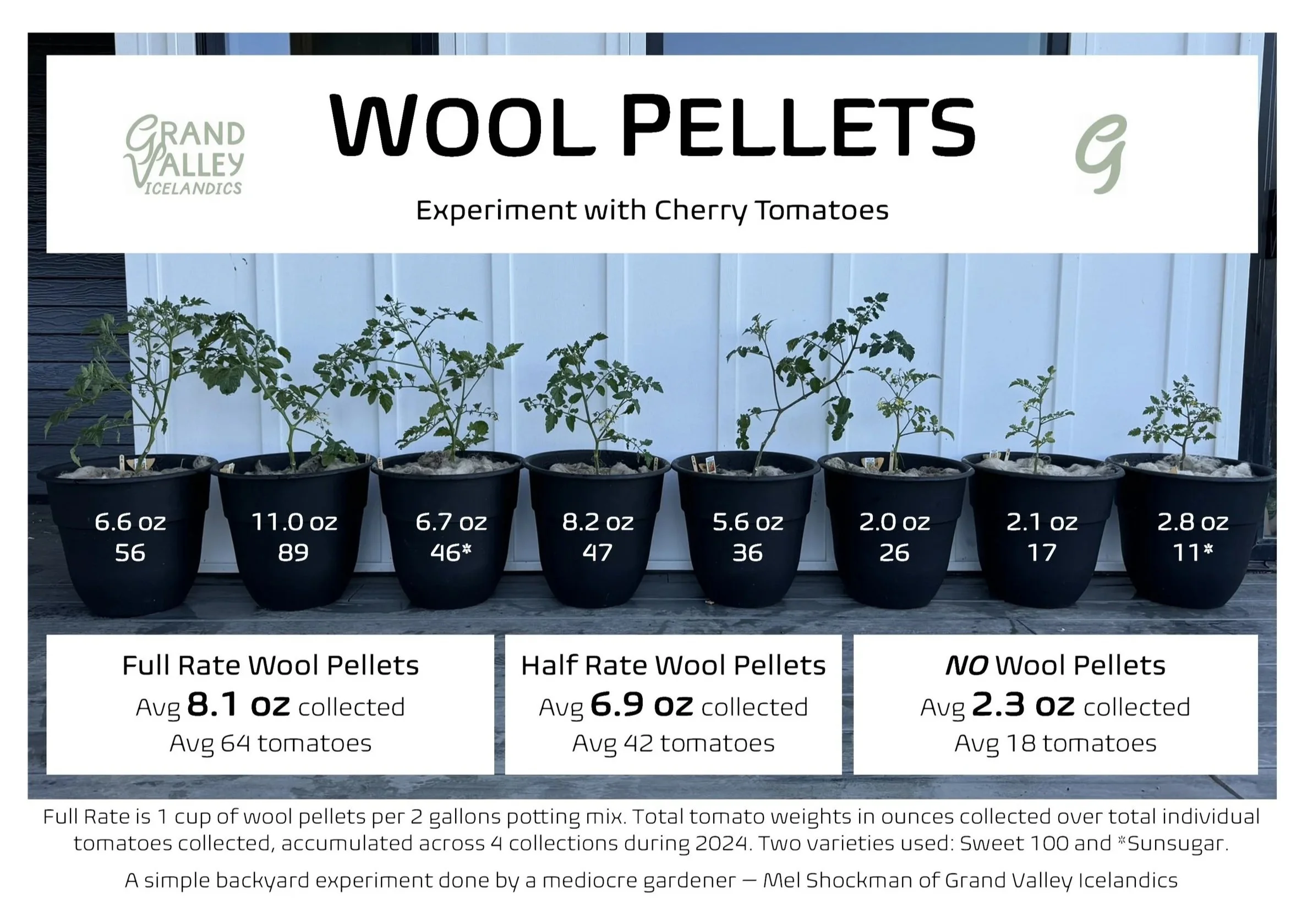
If you are interested in a few more of the details, continue reading!
This experiment was simple — I wanted to know if wool pellets would help plants produce more. So I had my two main groups - one group with wool pellets at the recommended 1 cup of pellets per 2 gallons of soil rate, and one without. But I also was curious, what quantity of wool pellets will make a difference? So that question created my third group — my “half rate” wool pellets group. There is an investment when it comes to soil additives like wool pellets, so could I use half the amount and get the same results? That had me wondering.
With this experiment, I also wanted to be within a budget. I didn’t want to buy a setup of 30 potted plants to have 10 replications within each category…like I have mentioned, I don’t garden.
I settled on 8 potted cherry tomato plants from my local greenhouse. Only slight difference amongst those 8 plants, is that 6 were Sweet 100 variety and 2 were Sunsugar variety.
3 pots had full rate* of wool pellets. 1 of these pots was a Sunsugar variety.
2 pots had half rate of wool pellets.
3 pots had NO wool pellets. Zero. 1 of these pots was a Sunsugar variety.
*full rate of wool pellets is the recommended 1 cup per 2 gallons of potted soil
Everything was the same —
Potted soil type from the same bag, equal measurements for each pot.
Watering amount and timing — each pot got the same measured amount of water, when I watered. I didn’t have a consistent schedule…mediocre gardener, remember?
Natural weather, sunlight, rain, all sitting on my porch on the south side of the house.
Wool mulch layer — all 8 pots had a layer of wool mulch on top to add to retaining moisture in the soil. Who wouldn’t?
Setup pots and bought plants on May 11, 2024.
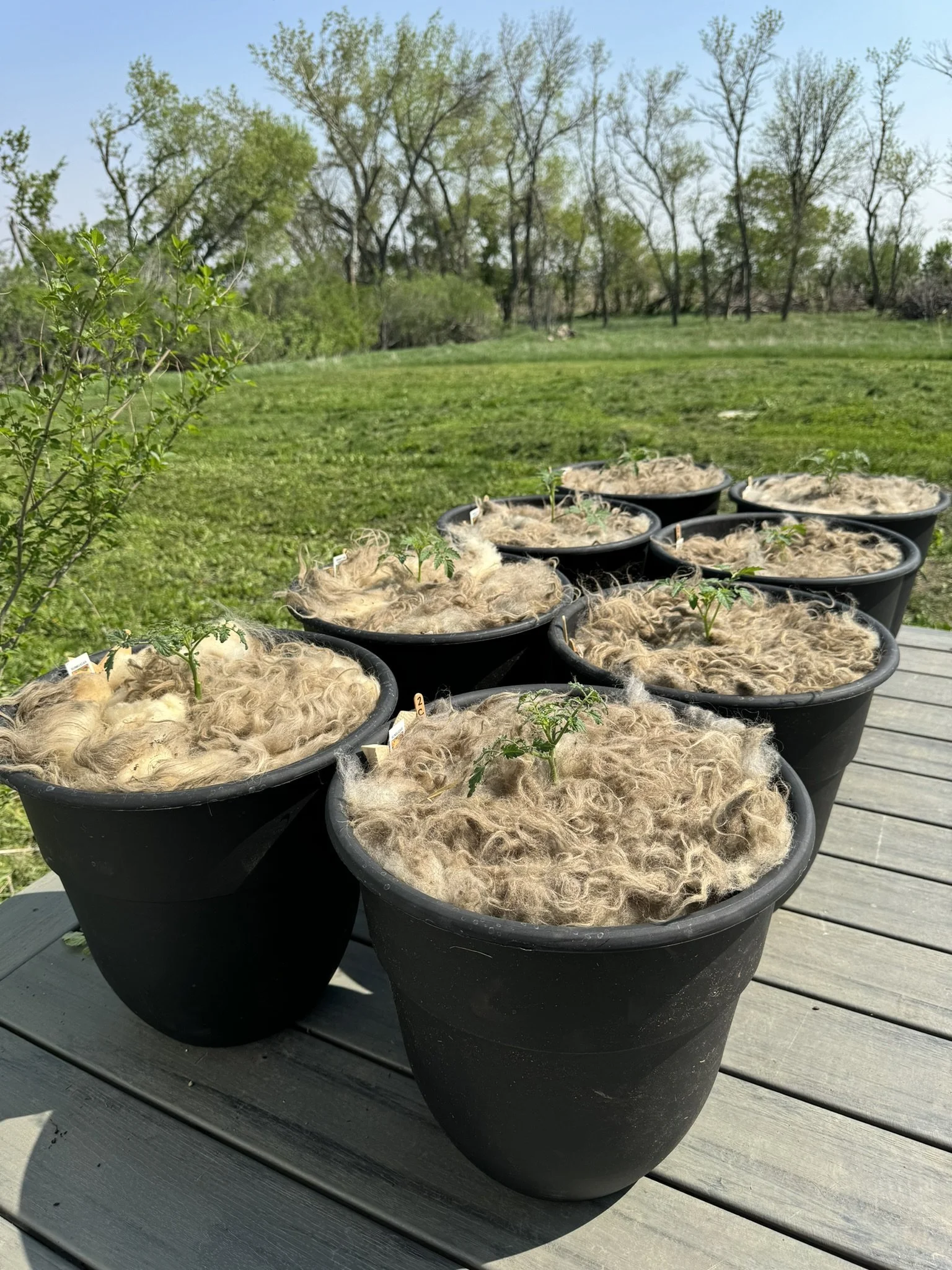
Pots were scrambled in the corner of my porch, so I didn’t have any indication of order or groups. Each pot had a unique label, but I did not look or care to look for quite some time.
“Say cheese!”
June 14, 2024
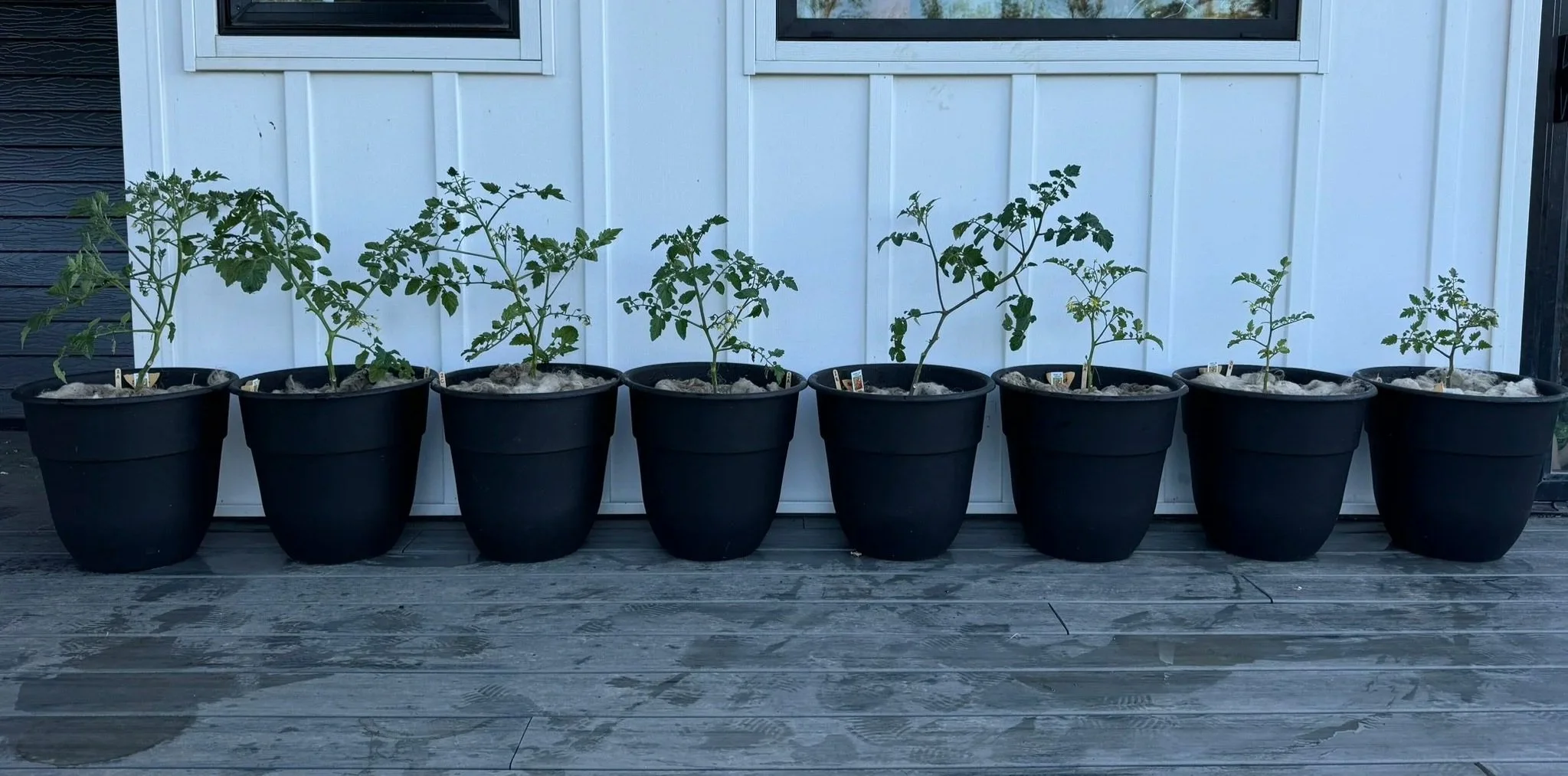
When I first took the photo of the lineup of all 8 cherry tomato plants, I noticed a visual difference between pots with pellets and pots without. I instantly started assuming that half rate wool pellets and full rate wool pellets produce the same.
That was until I started recording all the weights of cherry tomatoes produced from each plant. This included ALL cherry tomatoes, including the ones that fell off before I could harvest from the plant.
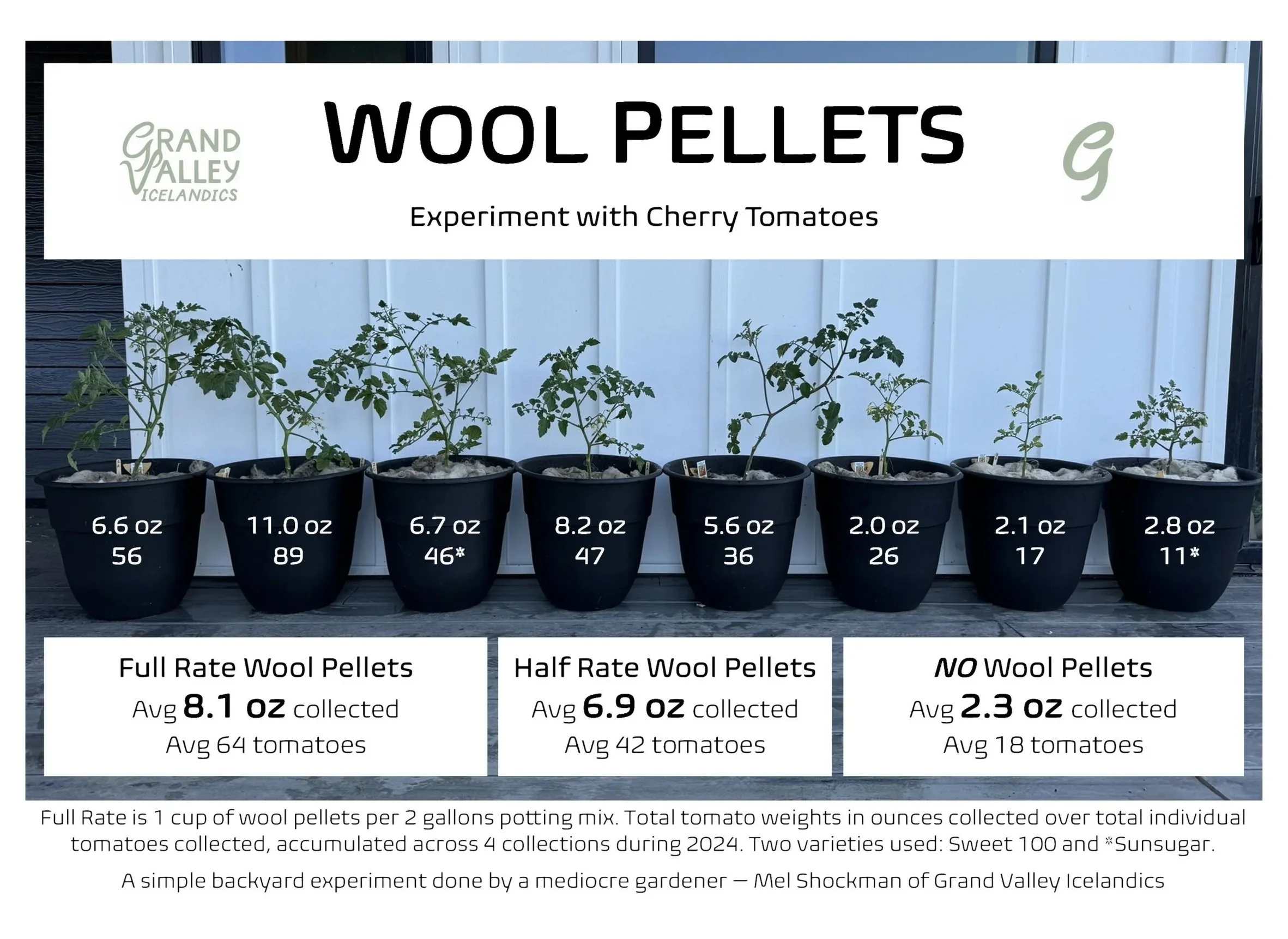
I collected 4 different occasions, recording all of the ounces from each plant. In the end, I tallied total weights from all 4 occasions for each plant, and then averaged the total weights amongst each group; full rate, half rate, and no wool pellets.
I was surprised to see the difference between half rate and full rate, because my first reaction to how the plants looked, had me thinking they were nearly the same results.
In this experiment, I showed that there is a large difference in plant and fruit production between NO wool pellets being used versus full rate wool pellets being used. I also showed that half rate wool pellets also showed a difference from no wool pellets, but full rate wool pellets still surpassed the half rate in tomato production.
I did not go deeper into the results beyond what I am sharing to you now. I could figure out the “significant difference” values, but I didn’t really see the point. This simple experiment had quite the leaps and bounds between each group. This would be a great experiment to see from someone who actually grows gardens each year. I am sure, whoever is seeing these cherry tomato results is probably thinking that I still didn’t grow a lot of tomatoes….well, you are correct! If anything, I believe I showed how wool pellets are well suited for lazy gardeners like me because of their great ability to reduce watering needs!
If you made it this far, thank you. I hope I didn’t bore you, or at least gave you a laugh or two. For what it is worth, I really like soil health and being well aware of my impact on the land. Using discarded wool as a soil amendment is a great use of a natural, biodegradable resource. If you are the happy owner of some wool pellets from me, or from any farm for that matter, I would enjoy hearing about your wool pellet journey.
Melissa